POVscience presents

The Depth

A weekly descent into the science worth slowing down for.

Issue 001 · Sunday · 3 May 2026

This week

Ten billion years ago, a supernova went off. We're seeing it five times. Off the Pacific Northwest, a tectonic plate is quietly tearing itself apart. And a nuclear clock just got a simpler way to be read.

 
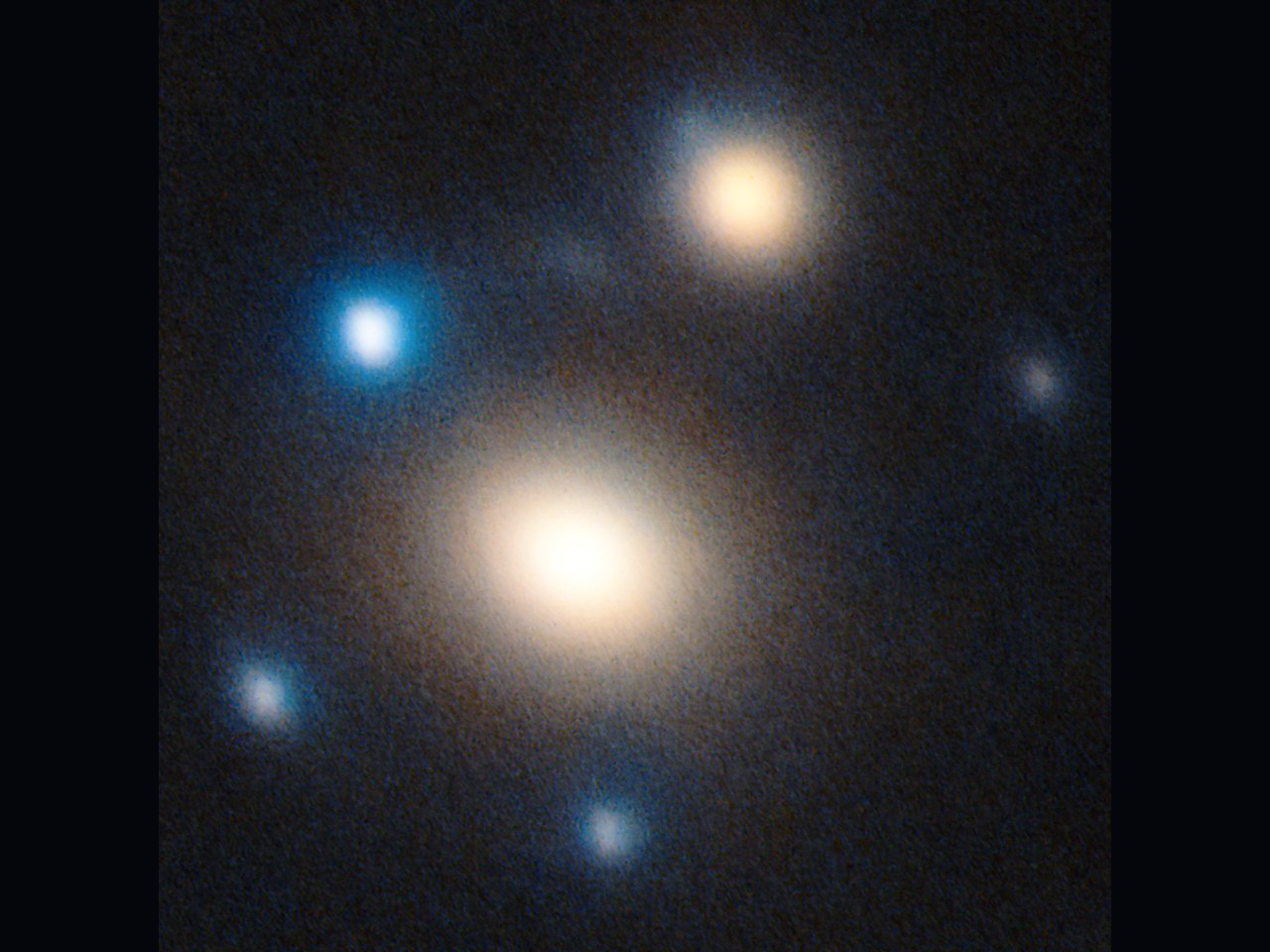
Large Binocular Telescope image of SN Winny: two warm-toned lens galaxies at centre with five bluish copies of the supernova arranged around them

SN Winny imaged by the Large Binocular Telescope. The two warm galaxies in the centre are doing the lensing; the five blue points around them are the same supernova arriving five times. Credit: SN Winny Research Group.

Lead Story · Cosmology

A Supernova That Exploded Five Times

Two foreground galaxies bent the light from one supernova into five separate images. The tiny gaps between when each one arrives are now the cleanest measurement we have of how fast the Universe is expanding.

A team led by Sherry Suyu at TU Munich and the Max Planck Institute for Astrophysics has caught a single supernova showing up five times in the same patch of sky. They nicknamed it SN Winny (formally, SN 2025wny). It went off ten billion years ago.

Between us and the blast sit two foreground galaxies. Their gravity warps spacetime, so the supernova's light bends around them along five different paths. Each path is a slightly different length, which means the same explosion reaches Earth at five slightly different moments. One supernova. Five arrival times.

Nobody has caught a superluminous supernova lensed like this before. The team puts the odds lower than one in a million.

Those lags are a clock. Measure them, drop them into a model of how the two foreground galaxies bend the light, and the Hubble constant — the rate at which the Universe is expanding — falls out directly. It sidesteps the cosmic distance ladder entirely; the catch is that the answer is only as good as the lens model.

Two existing methods disagree about that rate. The mismatch is called the Hubble tension, and it has been cosmology's open wound for a decade. SN Winny is one of the few measurements clean enough to settle which side is right.

Source · TU Munich

"It is an extremely rare event that could play a key role in improving our understanding of the cosmos." — Sherry Suyu, TU Munich
Read the Source →
 

Three more this week

Quick hits

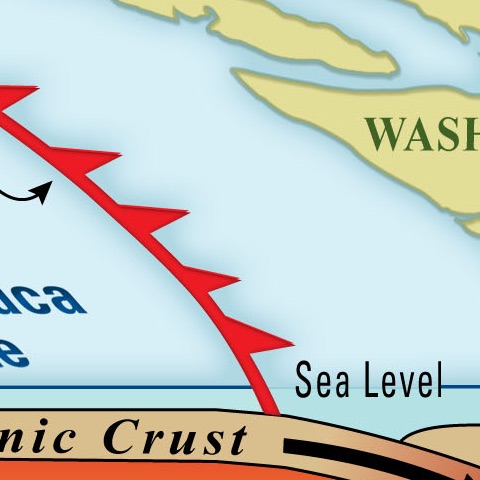
USGS diagram of the Juan de Fuca plate subducting beneath North America

Juan de Fuca subduction diagram. Credit: USGS.

Geophysics

A tectonic plate is dying under the Pacific Northwest

Seismic imaging caught the Juan de Fuca plate breaking apart in real time. A seventy-five-kilometre tear runs through it, with one fault already dropped five kilometres and whole sections gone silent. The first direct look at how a plate ends, piece by piece. Source →

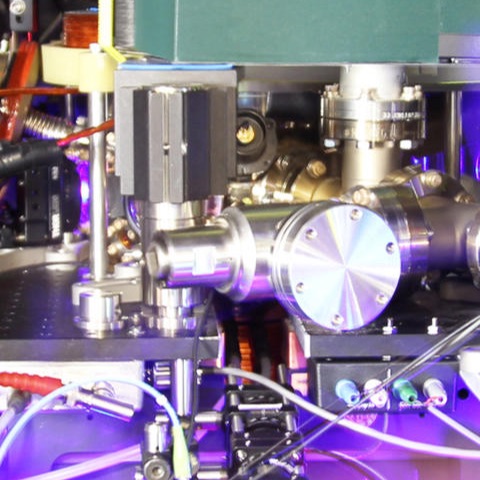
JILA strontium atomic clock under laser light

Stand-in: JILA's strontium atomic clock. The new thorium-229 result has no released press image yet. Credit: NIST/JILA.

Physics

Thorium-229 nuclei excited inside an opaque solid

A UCLA, LMU and Mainz team drove the thorium-229 nuclear transition with a laser inside a non-transparent material and read it out by catching the electrons it ejects. That removes a long-standing constraint — the host crystal no longer has to be see-through — and widens what a future nuclear clock can actually be built from. Source →

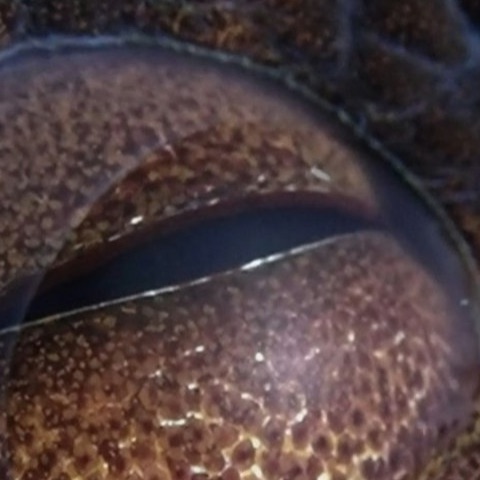
Close-up of an octopus eye

Octopus eye. Credit: Oleksandr Sushko / Unsplash.

Biology

Most of an octopus's neurons aren't in its brain

A new Scientific American piece walks through what neuroscientists are learning by treating cephalopods as an entirely separate evolution of intelligence. The headline number: more than half an octopus's neurons live in eight nerve cords running down its arms, not in the brain. They are the only non-vertebrates that built a big, smart brain — and they did it from a different blueprint. Source →


10B

light-years

How far the light from SN Winny travelled to reach us. It set out before the Sun existed.

Keep Reading